Showing posts with label Beekeeping. Show all posts

2012/02/07

What do you know about Beekeeping and Honeybees?

honey bee keeping
Beekeeping is not only one of the most enjoyable activities for many people, but also gives them many great rewards.

The first reward is a great yummy reward very useful for health, growth and productivity for all people-that is the honey.

The second reward is a great and very important help for nature by helping pollinating the plants around the gardens in the neighborhood or crop fields for that matter.

Pollination is an important, if not the most important aspect that helps increase the production of vegetables, fruits, crops and so on.

Bees are very hard workers; they spend their short life working hard to bring the nectar into the hives.

Bees have nearly 35-days lifetime. After that, their wings get worn out and they aren't worth anything to their community. That's when they die.

Bees work hard to bring the nectar into the hives to produce honey to their life, and then they store this honey for bad times –when the flowers disappear from the neighboring lands around. 


In some seasons there are lots of flowers for the bees to collect nectar, so the enthused bees produce more than they can ever eat.

Beekeepers harvest loads of honey in this time. And you can always make money selling honey.

Beekeepers use centrifuge equipments (extractors) to remove the honeycombs then they sell off the honey gathered from hives. It's liquid honey.

Beekeepers are able to sell honey in another different form by cutting the honeycomb into pieces! There are a lot of people out there who like to buy honey in the original wax combs - right at their source. 

The honey sold this way isn't ready for use, but for people who want things natural, this is an added attraction.

There are different kinds of colors and flavors the honey comes in.

The colors and flavors of the honey differ according to the different scents present in flowers. In the same way, nectar from different types of flowers smells and taste different.

Also the variation of the soil type can also influence the appearance of your honey and causes variation in taste and smell of the honey.

As for an instance, you can get honey something between white and clear from the nectar of flowers grown in dry or alkali type soil such as flowers of alfalfa, On the other hand, honey that comes from buckwheat is very dark because these flowers grow in soils characterized by acidic .

Honeycomb's quality can also influence the color of the honey, as well as its looks and tastes. Sometimes, the color of the honey is golden, while you can also find red or green.

Beekeeper should learn and know all things affecting his bees and honey produced by them to gain the best profits from this great valuable business.

2012/02/02

How to Collect Bee Pollen without being stung ?

bee pollen honey
Bee hives like as small factories producing many beneficial products for our health and fitness
Bee Pollen is one of the important healthy products you can gain from your bee hives.

Most people don't like the idea of collecting bee pollen or honey because they don't want to get being stung.


How to Collect Bee Pollen safely?

Collecting pollen needs some skills, and a little knowledge, you should know how to collect pollen by the right way to do it safely.

The first thing you should know is about understanding the method by which the bees collect bee pollen before they bring it to their hive.

Bees carefully collect it from the most select flowering plants with their tongues, and they pass it back to a basket on their legs.

The pollen sticks to hairs found on the bees’ legs while bees are going between and around flowers

This means that potentially a bee could hold tons of pollen during the course of their collection! Once they complete their collection, they will then carry it back to their hive. When they do, we have to be clever in making it possible to collect it by our own methods!

Bee Pollen Trap

The easiest way to collect bee pollen without hurting the bees is by making little trap doors that the bees must fly through in order to get to their hive, and as they do, the mesh will capture the pollen .

Thousands of pounds of pollen are collected by bees each year, because they need it in order to survive and to feed off the pollen, while the Queen Bee feeds off of the royal jelly which is also a different substance from honey and pollen.

The bees give us many important products helping us to be healthy.

The bees not produce honey, royal jelly and propolis only but also they make it easy for us to get this pollen from the flowers by doing the hard work by collecting it from flowering plants, otherwise you can imagine it would be quite a tedious process to collect pollen directly from the flowers.

Some bee farmers put little trays below the mesh netting where the pollen can drop off, and all they need to do is take that tray, get the pollen, and then start the process. 

2012/01/28

How to Manage Your Honey Bees in the winter?

 bee keeping courses
Honey bees work hard all over the year through different climates in different seasons, so raising honey bees requires proper management all year round. 

Even though beekeeping is commonly regarded in the warm months, you should give attention to some information’s about what you should do to manage your bees during the winter months:

...If the bees have not stored up enough honey to survive the winter months, then they will suffer from difficult situations during these cold months and will start to exhibit signs of starvation.

Some bees may die out during this cold time and will need to be disposed of.

You should watch your bees carefully during the winter season to avoid this condition of starvation, and if you find out the food stores are low, then you may need to create some sugar syrup for them in order to maintain the remaining bees.

... To ensure that there will be enough worker bees available in spring for honey production and to gather pollen, you should get your queen bees ready.

Ensure that your queen bee is laying enough eggs so that. If you feel that your queen bee is not producing enough, then you can always re-queen by purchasing a new queen bee as a replacement.

...To avoid destruction of your colonies by diseases you should check your hives consistently for any signs of disease - Disease within a colony can wipe it out completely. 


If you find any signs of disease, then all equipment should be disposed of immediately.

These are just some tips to get you managing and raising honey bees effectively so that you can get ready for the spring months. Managing your bees can be a fun experience if you continue to work at it all year round.

2012/01/23

Critical Beekeeping Supplies

bee keeping supplies
If you love beekeeping ,you need to keep some important beekeeping supplies

Self-safety is critical for beekeepers , Using protective clothing can be a good idea. 

The essential supplies like hats, mask, gloves and beekeeping suits can be handy.

Focus especially on the safety of your face. Skilled and learner beekeepers should remember this. You can use a hat and a mask for protecting your face. 

Using gloves during beekeeping tasks is a must for protecting your hands - especially in the instances when you extract honey and handle a honeybee colony. 

You should also use the beekeepers' kits to stay safe from bee venom. 

Using a "smoker" will help you in working with the comb or the bees. 

Smokers are designed to emit smoke that makes bees to seek out food, and that's apparent as the smoke makes them to leave the hive

The bees feel a sense of urgency anticipating a fire. Smoke can also trigger alarm pheromones to be released by the hive's guard bees as they sense an intruder. And the beekeeper's job becomes easier when the bees are confused. 

The smoke is produced by different kinds of fuels. 

Most beekeepers like to use a blend of those. 

There are eco-friendly natural fuels that you can use. Hessian (burlap) and twine are among the common fuels. 

Then again, pine needles and corrugated cardboards can be also used as smoke creators. 

Burning rotten wood or using typical pulped paper and/or compressed cotton work for some people. Finally, beekeepers also use aerosol cans to make smoke.

Bees are naturally experts in locating food, but arranging some extra sugar syrup can really help. 

This sugar syrup keeps them from starving. The syrup keeps them going when there isn't enough food around. Sugar syrup kindles the egg-laying capacity of bees .

Beekeepers also need feeders for feeding bees . 

Many varieties of feeders are available, but hive tops, pails or division boards are pretty common.

In summer, bees are constantly moving and tend to stay away from the hive most of the time. That's why it makes more sense using entrance feeders.

Beekeepers also use wax sheet foundations to make artificial hives for housing the bees .
This helps the bees to use the sheet as the base of the comb and they start building combs on the foundation sheets. 

These are quite useful when you need to extract honey

Bees need to work less hard to build their hive on these sheets.

2012/01/10

Beekeeping Hives

bee keeping hives
Do you know beekeeping

Do you want to be a successful beekeeper ?

Beekeeping is not only about collecting honey and profiting from it, there are many other aspects such as understanding the species of bees you want to breed and the beekeeping station.

As a beekeeper, you need to be very familiar with the types of hives required, which hive goes well with which bees, the lifespan of the hives, and so on.

When you purchase a beekeeping hive to house your bees you have to keep in mind that the beekeeping hive you will go for should be able to bear the weather conditions of the place you live in..

There are three old types of beekeeping hives :

1- Mud and clay hive - this type beekeeping hive is made of clay and its origin is from ancient Egypt


Honey is collected from this hive by smoking one end of the clay which makes the bees fly off to the other end. Thereby, the honeycomb is left unguarded and collecting honey becomes easy.

2- Skep hive - this type of home beekeeping hive is actually a basket that has no inside structure. 


The way that bees move in and out of the hive, this hive has a single hole at the bottom. But there are two negative factors 
- firstly, you cannot inspect the internal structure of this hive. Secondly, to collect the honey, you have to destroy the hive and as a result, the bees would either fly away or get killed.

3- Bee gum hive - this type of beekeeping hive is located in the hollows of gum trees. 


It is better not to go for this type of hive because for collecting honey, you have to practice sulphuring. 


Sulphuring  is Insertion of a container of burning sulpher inside the hive. This action would directly kill all the bees at once, probably not the best solution if you plan on keeping your bees for seasons to come.

These beekeeping hives are made to serve two purposes.. The first purpose is, to extract honey and second purpose is, to create an avenue for pollination of nearby crops.

There are also two modern and most commonly used beekeeping hives readily available in the market :
 

Top Bar hive - used mostly in the UK.


Langstroth hive - used mostly in the US.

Both these hives share common features. 


They have removable frames that makes it easier for the beekeepers to inspect the bees, honey can be easily collected without killing any of the bees and their homes can be used over and over again for a longer period of time. The perfect choice if you're a serious beekeeper!

2012/01/06

Bee Keeping History from Egyptians to Americans

honey bee keeping
There are many evidences from rock paintings and very old drawings of bee-keepers in the Niuserre's sun temple from the 5th Dynasty (before 2422 BC) that The Egyptians kept bees at the earliest centuries . 

These drawings show bee-keepers blowing smoke into the bee hives as they remove honey-comb .  


Pots of honey were found in the grave of some of the Pharaohs, including King Tut.

Beekeeping goes back thousands of years to the stone age, cave drawings of bee keeping dating back to 6000 B.C. -showing people collecting honey from bee hives- have been found in Spain.

Bee keeping has been practiced in all societies and in all continents (except Antarctica) throughout the world. 


At first, humans just raided the beehives and in doing so, destroyed the hives. But then somewhere along the line, humans began creating bee hives and domesticating the bees. Artificial bee hives were created in hollow logs, large pottery vessels, straw baskets, and boxes made of wood.

Beekeeping came to the U.S. in the 16th century and in the 1800s the first apiculture system was brought to Pennsylvania by John Harbison. 


During the Great Depression and World War I bee keeping become very popular due to sugar/food shortages and the high cost of food. People ordered bee hive equipment from the Sears and Roebuck catalog. 

Wild bees were then transferred from trees into the newly purchased hives. People had to make due back in those days, and bee keeping was a great help to many.

Unfortunately beekeeping lost popularity after World War II. But now with the Colony Collapse Disorder (bees simply vanishing from hives throughout the U.S) bringing attention to honey bees, more people are becoming interested in taking up bee keeping again.

That's wonderful news for the honey bees, and for our food system since without honey bees to pollinate our crops over 2/3s would not grow.

And the renewed interest in backyard apiculture is not just a rural thing. 


Big cities like Tokyo, Washington, D.C., Paris, London, New York City and Berlin are encouraging urban bee keeping. And these are some of the biggest urban beekeeping areas in the world.

With scientists still trying to figure out what is causing Colony Collapse Disorder its vitally important now that people begin to take up apiculture by the thousands. 


We need bees to pollinate our crops, flowers, apple trees, and many other plants. Plus can you imagine a world without honey, I don't want to. I love the stuff.

2011/04/20

Raising Queen Bees - a profitable project

honey bee keeping
Queen bees are the most important member in the bee colony.
Raising queen bees needs your full attention as you are raising very delicate creatures.

Beginners in beekeeping can buy their bees in different forms depending on their budget, their experience, and how much time they are able to dedicate to their project.
 

Raising queen bees is more difficult than raising a colony.


Queen bees need more attention and experience as you must separate any queen that appears from the colony to start forming a new colony.
 

If you want to see your colony producing honey as soon as possible, then you need to buy a complete colony to start with.
 
The complete colony contains one queen bee, several thousands of worker bees, and some male bees for reproduction.

If you want to see your colony grow step by step in front of your eyes, then you need to buy a smaller colony that contains only few thousands of worker bees.


You have to wait some time for your young colony to grow.


You will need to nourish them and provide them with the needed care to grow and start producing honey regularly.

By separating any new queen bee appears in each colony, then you can have many queen bees that are ready for making new bee colonies.


It is a profitable project to raise queen bees and sell them to other bee keepers.

2011/03/23

three Common Honey Bee Types

honeybees
Learning about the different types of bees can help in identifying which ones are more suitable for beekeeping than others.

Certain bees don't tolerate a lot of disturbance while others do.
Within this article I hope to give you some indication about three common honey bees' types as well as the two other types as far as behavioral differences are concerned.

Behavioral dimension :

There are effectively two known types of bees if one considers the behavioral dimension. In fact, there are solitary bees and social ones. What are solitary bees and what are social bees?

Solitary bees are bees that do not live in a colony

Social bees do the contrary, meaning that the queen the workers and the drones live all in a colony.

Disturbance Level :

These little creatures also differ in their tolerance of disturbances. In fact, certain colonies may abandon their hives because of disturbances. 
However, the level of disturbances tolerated by bees varies. Some bees can tolerate more disturbances than others.

(1) The Apis Florae :

First of beginning with bees that don't tolerate a lot of disturbance we have the apis florae. As mentioned earlier, if the apis florae feels disturbed it is likely to leave its hive.

This species are characterized by a smaller size when compared to other honeybees, they build single comb hive and are generally found in forest as well as in lush, areas of farming .


(2) the Apis Dorsata (the rock bee) : 
The rock bee or apis dorsata is another type of honeybee. It is characterized by a bigger when compared to the other honeybees

The apis dorsata shares some similarities with the apis florae or dwarf bee. 
Effectively, the rock bee also may abandon its hive because of disturbances. 
Additionally, the apis dorsata, construct single comb hives like the apis florae. Their hive can also be found suspended like those of the dwarf bees.

Having the hive suspended 5 meters above the ground can serve as a protection against honey predators of a larger size .

(3) the Apis Cerana (oriental honey bee)
 
The Apis Cerana differs particularly from the dwarf and rock bees in the fact that the apis cerana can live and be raised in man-made beehives.

The apis cerana build parallel comb hives instead of the single comb hives particular to the two other honey bees types .

The climate seems to have an influence on the size of the bees. Consequently, due to the variety of places with diverse climates where the oriental honey bee can be found, the bees also have different sizes.

2011/03/21

How To Choose The Best Beekeeping Books

How To Choose The Best Beekeeping Books
To start a serious beekeeping business, some great literature on the topic will be one of your priorities.
 

While much of keeping and managing these little flying insects is hands on, the topic requires a small wealth of knowledge for the best success.

When you are first getting started, this can feel like an overwhelming task - even for the hobbyist.
 

Where is the best place to get the most reliable information?


Your local library will likely have a section on the topic, but it may be too much of a trip for you. It can also be annoying when the book you really want to read has already been checked out.

You can research online as well, but this can take a lot of time. There are may facets to beekeeping that will come up in your searches, and much of this information may not be relevant to you.


Probably the easiest way to get your organized information quickly is by ordering an e book. 


What kind of contents should you be on the lookout for? 


For those who are beginners, keep alert for a step by step guide. A proper guide will come with some clear pictures and diagrams, and should be easy to follow. Terms will be well defined and everything uncovered in good detail.
 

Here are the topics you'll want your beekeeping e book to cover:
 

How to start beekeeping ?
 

Where are the right places?
 

When is the best time of year to start and perform specific duties ?
 

What are the tools you will need ?
 

How much equipment is necessary ?
 

What is the best way to control the bees ?
 

What are the techniques to place bees in the hive and remove them when needed ?
 

How to extract honey ?


The kinds of bees available, and enough detail for you to discern the right ones for you to get .
 

Basic beekeeping laws and what you might expect from some local governments.
 

If you have never purchased an e book, they are generally produced in a way that they can be opened on any computer. 


One great advantage is because of it's electronic format you can quickly type in a term and find reference to it quickly within the book. 


E books may also contain some embedded links that can make a trip to a website with more information just a quick click away.

With todays technology, whole libraries of e books can be downloaded onto a Kindle or even an Ipad and this can make for no lack of great reading materials on any trip. 


It is possible to come across e books that are somewhat dated. 


Do look out for the most recent and updated information when it comes to beekeeping as the art is constantly evolving. 


You will want to be up to date on the newest technologies, as well as warned of any new diseases or bee issues.


Article Source:http://www.articlecity.com/articles/pets_and_animals/article_3486.shtml

Life of a Carniolan Queen Bee

honeybees
Carniolan Queen Bee is a big lady who dares to kill and spends her entire life to do nothing else than mating and laying eggs while well served and fed by the worker bees.

The metamorphosis of queen bees :

Before a female bee becomes a queen she will go through a metamorphosis from an egg to a stage of a mature queen which will occur in about 23 days. 


The phases include: egg - larva - capping of the queen cell - pupa - emerging pupa, virgin queen bee - nuptial flight - a mature queen bee ready to lay eggs.

In fact, those are the worker bees that make queens. 


After a queen bee has laid eggs in queen cups, the worker bees start to select which among all those larvae should be developed to be queens. 


They will then provide more quality food, which is the royal jelly, to those selected larvae. 


Although all larvae are fed with royal jelly at the beginning for several days, but only queen larvae will be fed continuously and exclusively. 


The rest of the larvae will become worker bees.

Queen bees are raised in very special constructed cells. 


Initially the eggs were placed in queen cups, as the larva emerge the worker bees then build it further to become a queen cell to exclusively feed the larva. 


The worker bees then will cap the queen cell with beeswax. In these cells larvae will develop into pupae. In about 7 - 10 days the pupa becomes a virgin queen bee and tries to emerge from the queen cell.

Upon maturity the virgin queen bee in her peanut-like cell will try to go out by chewing a circular opening on the cap cell made by the worker bees.


After most of the cap has been cut, the cap will eventually swing open resembling a hinged closure. With the presence of the virgin queen, the old mother queen will give way to the young virgin and voluntarily leave the hive with the primary swarm.

A virgin queen is a bit larger than most of the worker bees, but smaller than the mated laying queen.


In fact, a virgin queen is not easily distinguished when put together with the worker bees in a frame. She moves actively and can run across the honeycomb, scrambles over the workers and may even fly if she feels annoyed by the workers. 
You can frequently find a virgin queen hanging on the hive wall or corner.

The deadly queen competition :

As soon as a virgin queen bee emerges from her cell, she will look for other emerging queen bees with only one straight purpose, to kill them! 


As there are many virgin bees in a colony, with all of them having the same purpose, it is most likely that a war of virgin bees is about to happen.
 

Virgin bees do not just killed their direct rival virgin bees, but also the un-emerged virgin bee still occupying its cell.


You can often see an opened side of a queen cell with a dead pupa inside, indicating an assassination by another virgin queen.

When the swarm mode of a colony continues and the primary swarm has left the hive, the worker bees can temporarily hold the virgins fighting each other. Some virgins may leave and follow an after-swarm, while other virgins will stay and look for an opportunity to continue the deadly competition


At the end only one virgin remains who will become the new queen bee. If a primary swarm has both a new young queen and an old queen in the same time, the new queen will let the old queen to live and continue to lie down. 


After a few weeks the old queen will eventually die naturally and time has come for the young virgin to take over.

The nuptial flight :

This is an important phase of the queen bee where she mates with bee males and then land to start the new generation of a colony in a hive. 


The mating is typically carried out during a flight of the queen and male bees, hence called nuptial flight.
 

The mating should happen in a clear weather with the absence of rain which could be a trouble for flying insects. 


The queen starts to release pheromones to attract the males. However, after releasing the pheromone it often happens that the queen tries to escape the males letting only the fastest and fittest male bees to mate her. The mating will occur during the flight.

It is common that a queen will mate with a number of males and stores the sperm in a special organ in her abdomen which can last for her whole life. 


This sperm storage is good for about 20 years which can produce ten of millions fertilized eggs. 

The queen is now ready to lay eggs continuously and she totally becomes an egg laying machine to breed the younger bee generation. 


Oh, what a life of a queen bee. 

Life Cycle Of Honey Bees .

honeybees
Three Things Successful Beekeepers Know :

1. The unique life cycle of the honey bee :

The queen bee lays eggs in the octagonal shaped cells and the eggs get attached to the wall of the cell with a strand of mucus.


During spring when the eggs are being laid, the queen bee can lay up to 1900 eggs in a day. 


The egg remains in the cell until it hatches and there emerges a larva.


There are nurse bees that have to care for the larvae and feed the larvae with honey and secretions from the glands which are referred to as bee bread.

There are five stages to the development of a larva, and the larva sheds the outer skin after each of these stages. On the sixth day of this procedure the larva is cocooned by one of the worker bees in its cell where it stays for the next eight to ten days and then emerges as a fully formed bee from its cocoon.

2. The life span of a honey bee :

The life span of the honey bees depends on the purpose that they are in the hive for .


Different jobs have different honeybees doing it and their life spans also differ accordingly. 


The queen bee has a life span of two years but this is only if she has been inseminated with a sufficient amount of sperm while she was on her nuptial flight.

The queen bee if she is in a good condition can lay up to 2000 eggs in a day and is also responsible for killing her mother and sisters too. 


The queen bee has nothing to do as there are enough bees in her entourage to feed her and to clean the waste matter too.
 

An older queen bee will leave the nest while the rest of the bees from the hive are going to swarm. This usually happens during spring time. 


Those who are proficient in bee keeping, think that the queen bee generates some sort of pheromone that avoids the worker bees from the hives in becoming interested in sex.
 

The virgin queen bee is one who has not had her nuptial flight. 


The drone bees are the ones that survive only until they have impregnated the queen bee during her nuptial flight. The drone bee dies after mating with the queen bee.

3. Life of the worker bee :

The worker bee lives for one hundred and forty days only during the winter, and during summer it is only forty days. 


They have a short life span because they literally work themselves to death. 


There are many different duties that the worker bees have to perform.
 

The nurse bees take care of the larvae while others have to go out and collect pollen to make honey. 


Other workers have to be capping the honey combs while some have to attend on the queen bee. 


These worker bees also have to starve the drone bees to death and clean the hives. 


All worker bees are always sterile and in case they lay an egg are drone bees.
 

Each hive has between twenty thousand to two hundred thousand bees in a one hive. 


The bees only survive if their queen life, if anything happens to the queen bee then the whole hive dies.

How to Buy Honey Bees ?

package bees for sale
Package bees :

Package bees are one of the ways to can buy honey bees when you want to start beekeeping and producing honey.


Beekeeping does include getting the honey bees into your beehive! 


Having decided to start keeping bees, either as a hobby or as a commercial venture, you have bought or made and installed your beehives in an appropriate area.
 

You have all the equipment necessary - and now you must get yourself some honeybees! To move forward, please follow below mentioned guidelines.Buying Established Honeybee Colonies :

For starters, it is simpler for to buy recognized honeybee colonies from a trustworthy local beekeeper. 


It is better to buy two colonies so that in case, one of the two colonies become weaker, you can exchange frames of brood and honey.
 

A colony of bees consists of 20,000 to 60,000 honeybees, one productive queen, 10 to 12 combs, brood and foodstuffs.

You may also buy a 'nucleus' consisting of 5 to 7 frames, a fertile queen, workers, stores, brood, and probably, drones). 


It will be easier to control the smaller quantity of bees in a nucleus or a 'nuc box'. 


This will be a quite appropriate option for first-time beekeepers. 


The benefit of this method of getting bees is that it is the fastest choice to get started because by now you have honeycomb and brood, as well as all the bees you require.

You may purchase honeybee colonies and nuclei online, but it is strongly recommended that you buy them from reputable local beekeepers or suppliers. 


There is not an iota of doubt that locally bred bees are better adapted to weather conditions in your district.

How to Order Packaged Bees ?

The second option is to buy packaged bees (each package contain worker bees and one queen bee) to transfer into your new beehive(s). 


Usually, honeybee packages that you order are dispatched by mail in 2 to 5 pound packages, containing 9,000 to 22,000 bees.
 

A three-pound package of bees, for instance, contains approximately 10,000 bees and 1 queen and is about the size of a shoebox.
 

A bee package sent through the mail will have a screen around it and a can of sugar water inside the package for the bees to eat during the trip. 


To separate the queen from the other bees, a cage is used. The cost plus shipping of a three-pound package of bees will be between $50 and $70.

Unlike a ready-made bee colony, the worker bees from a package will need to be fed for a short time after you transfer them into the hive(s), until they begin to gather nectar and pollen and build honeycombs to produce their own food.


If you decide to order a package of bees, it is important to do so at the right time. 


The bees should arrive and be installed into the hive in early April, giving them sufficient time to establish the colony before winter arrives. 


Placing your order as early as January will ensure that your bees are reserved for you.
 

Make it possible to take delivery of your purchased bees from the seller yourself. 


A lesser number of bees will die than if you receive your order through the mail. 


If you are expecting a package of bees by mail, remember to ask your post office to notify you as soon as it arrives. 


The sooner you get bees home, the better, because they will most likely be thirsty and hungry.  

Installing a Package of Honey Bees

 bee keeping supplies
One of the most common ways of starting a new hive is to buy a 'Package Of Bees' from a bee supply company.

Package of Bees :

 The average package purchased comes with three pounds of honey bees amounting to about 10,000 bees inside plus a Queen Bee in a small screened cage in the center out of sight.

The Queen Bee is accompanied by two or three worker bees who attend to her every need during the period of shipment.
 

The bees are provided a large can of sugar syrup in the center of this mass of bees. 


This can is upside down with numerous pinholes punched in the lid to provide access to the food for their journey to their new bee hive. 


A small wooden cover is nailed over an opening o­n the top of the box to give access to its contents, the Queen Bee Cage, thousands of worker bees in a huge clump and a can of sugar syrup, food for their journey.

You should be ready to install a package very shortly after it arrives or wait until evening and keep them in a cool spot ( 50 to 75F ) away from the sun.


Your bee hive should be ready for the bees. It is not good for the bees to keep them in the package box any longer than necessary.
 

Spray a sugar syrup mixture ( 1 : 1 of water and sugar ) o­n the package screening. This will help to keep them occupied and remain calm.

Now you should you have the package of bees next to the open bee hive in which they are going to be installed. 


Be sure you have placed an entrance reducer in the hive opening o­n the bottom board. This is for the purpose of making it easier for them to defend the smaller entrance to the hive should a horde of robber bees descend upon the bee hive while they are getting themselves established.

Pry off the wood cover o­n the top of the package box. 

Gently slide out the large can of sugar syrup and place it to the side.
 

Pull out the small wooden cage with the Queen and slip it into your pocket to keep her warm and out of harms way. 


This cage is a small wood block suspended downward under the wood cover and hollowed out in the center to provide a chamber ( covered with a piece of screen ) for the Queen and a couple of attendants inside with her. 


O­ne end of the this Queen Cage has been drilled out and the tunnel is filled with a bee candy mixture so that she cannot escape.

This Queen Bee has not been raised with this collection of worker bees. 

If she were thrown in with these workers unprotected when the package was being put together, they would immediately kill her because she is not 'one of them'. While she is in this cage during shipment they get used to the pheromones she is constantly giving off and she and the workers become family so to speak. So when she is finally released from her cage she is 'one of them'.
 

When you are ready to shake the bees out of the box into their new home take the Queen Cage out of your pocket and using a small nail insert it into the bee candy and make a narrow hole. 


This is to help the worker bees now in the hive eat their way throug to enable the Queen to enter her new home. At this point you don't want her coming out through the tunnel and perhaps falling to the ground and getting injured or possibly stepped o­n or disappear from our sight.

Suspend the Queen Cage by gently putting it between the two frames about four frames in from the side of the hive box. 


Position the cage with the bee candy plugged hole facing down towards the bottom board and make sure the frames o­n each side of the cage are pushed together securely.. The bees will chew through the bee candy plug and release the queen within a few hours. 


Do not put the queen cage under the opening in the inner cover with the sugar syrup feeder sitting above it.

Bang the package box o­n the ground or the hive box itself a couple of times to get most of the bees to fall towards the bottom of the box. 


Pick up the box and invert it over the center of the hive box and give it a few healthy shakes so that the majority of the bees will fall down between the frames.


It's okay to bang the edge of the box to shake some of the remaining bees loose.
 

Some bees will fly around but don't worry about them as they will not fly away. They will never abandon their Queen. 


There will still be some bees stubbornly staying inside the package box.
 

Place the box o­n the ground in front of the hive with the opened area facing towards the bottom board. The bees remaining inside will eventually all crawl out o­n their own and march inside the entrance to the hive.
 

Close your hive up leaving the package bee box where it is o­n the ground.
 

Come back in a couple of days to check if the queen has been released from her cage. If she has not then gently lift the cage out and widen the bee candy tunnel making sure o­nce again that she does not fall out. Replace the cage and check it the following day.

Make sure that you keep them supplied with sugar syrup until they start building up their own supplies.


Starting a Honey Bee Keeping Project

honey bee keeping
Honey beekeeping has become quite popular home based business opportunity because honey bee keeping doesn't require a huge investment or space. you can start it right from your backyard.

One of the major issues which require special attention if you really wish to make your honey bee keeping project successful,is 'collecting bees'.


Some major ways to collect bee's are :

1. Colonies are available for purchase from local beekeepers or from other suppliers. colonies include queen bees and you can receive all the bees you want like queen bee, workers and drone as well for farming. This is the quickest option for a starting beekeeper.

2. Another option is to purchase a nucleus. In this option you will get a queen bee and some other worker bees. 'Nucleus' consisting of 5 to 7 frames, a fertile queen, workers, stores, brood, and probably, drones). It will be easier to control the smaller quantity of bees in a nucleus. It is a good start.


3. Another option available is in the form of a package of bees. Usually these packages include a queen bee and a certain amount of worker bees. In this case, the worker bees would have to be feed until they can begin producing honey on their own.  


4. If you do not wish to purchase bees then you can capture swarm of bees. But, it may quite monotonous for those who have just started their journey in this field. As, you first need to know how to protect yourself from swarm of bees.

When you pick up your bees they should be packaged in a special carrying case that is designed just for bees. 


When you travel with these bees you have to give sugar syrup as there will be scarcity of food for bees. Traveling is hard for bees so some bees may die. It is quite normal.

one of the most vital parts to make your honey bee keeping project successful,is choosing proper colony or hive. You can buy hives from a recognized seller and try to buy two colonies because when one colony will get weaker then you can exchange frames of brood and honey. 


A colony of bees consists of 20,000 to 60,000 honeybees, one productive queen, 10 to 12 combs, brood and foodstuffs.

You can also buy bees in package offer. In one package one queen and some worker bees are include. It is found by weight like in 2 to 5 pound packages, containing 9,000 to 22,000 bees.


A three-pound package of bees, for instance, contains approximately 10,000 bees and 1 queen and is about the size of a shoebox.

How To Keep Bees Without Being Stung To Death

bee hive
You've come to the right place for some tips on how to keep bees. 
Keeping bees is a hobby despite the fact that some people consider them dangerous.

All bees require being handled in the right way and they will be as friendly. Newbies in the industry are advised to acquire the basic techniques and equipment so that they can effectively raise them.


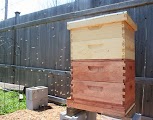
One of the basic necessities prospective beekeepers should get is a beehive. 


There are a number of beehives used by different people but the best ones are the commercially manufactured that resemble a small cabinet. 


Bees are possessive of their homes and hence you should be wary when tampering with the hive as this may land you in deep problems. Hives are best kept outdoors.

Each of the beehive structure should have at least 5 supers. The supers are structures where bees store their honey. 


They are located between the top and the lower part of the beehive. The young ones are also reared in the supers. You can choose from deep or shallow supers.

With deep supers, you only require a one size foundation while you will need multiple size foundations in case you are using shallow supers. 


Deep supers have a demerit of the fact that you require dragging 100 pounds when the beehive is full.

When installing a beehive, ensure to place it on a flat and firm surface where it will not easily be toppled over even by strong wind. 


The location of the hive should be safe to prevent both people and animals from disturbing it.

When you are installing the frames in the hive, there are some spacers which are generally wood planks placed in between. You will only need a few of the spacers to separate your super. 


Going through the beehive kit can help in proper placement of the spacers.

When the bees have made adequate honey, you will need to collect it. 


A smoker will be required. This is device that is filled with smoky materials and lit. When it is puffed, it produces smoke that confuses the bees making it possible for a honey gatherer to collect it safely.
 

A metallic hive tool is used in opening the beehive safely. Once you have learnt the art of how to keep bees, you can set up your beehive in a suitable area where bees will come on their own or else you can order them from local rearers.


Article Source: http://ezinearticles.com/?expert=Lisa_Braxton

Beekeeping Tips

 bee keeping courses
Beekeeping is a regulated process of raising bees so that honey can be collected. 


There is a long history behind the keeping of bees and it's not merely a pleasing hobby to indulge in.
 

It can also be a profitable business. But to truly see how much one can gain from this rewarding hobby, some lessons in beekeeping must first be taken. 


Making sure that you have in your possession the proper equipment is the first step to success in beekeeping.

The hive is the backbone of your beekeeping operation so the components of your hive are the most important things to consider.


You can start your beekeeping business by buying what is known as "package bees", which is a certain amount of adult bees typically between 2 and 5 pounds (1 and 2 kilograms). Or you can buy an established colony or even collect the swarms yourself.
 

It's certainly the advised recommendation for beginners to start off with the package bees. 


Also necessary for a beekeeper is the protective gear such as a beekeeping suit, gloves, and a hat and veil. Smokers are also very important. These control the bees making working with a hive and the colony possible.

Smokers are a device that emits smoke which then prompts the bees to prepare to vacate the hive due to threat of a possible fire. 


Smokers have a secondary function - masking the pheromone released into the hive by the guard bees when they think there is danger around.


The honey bee is quite a social insect and lives in hives because a colony can be home to thousands of bees. By contributing together, the bees in  the colony all look for food, raise newborn bees and assemble the nest.

Beekeepers can take advantage of the natural inclinations of the honey bee to collect honey that can be used for themselves or sold for a profit. 


One challenge that beekeepers face is the extraction of honey from the hive. It's actually very important to not leave it in the hive for too long. If left for too long, honey takes on a darker color and the bees will have no room for accumulating more honey. 


Most people have the impression that all honey is light in color, so although a darker honey is not of inferior quality, some may believe it is based purely on ignorance. 


On the other hand, it's extremely important to not extract the honey too soon. 


While honey matures it contains a good amount of water, and if harvested too soon, the honey could spoil or ferment.
 

When the honey is ready to collect, the bees will let you know. 


When it's noticed that there are wax caps covering the honey cells, it's a sure sign to harvest.

The best time to collect the honey is on a sunny day when the majority of the bees are active and out looking for food. The morning is usually a good time for this.


Before you even think about purchasing your bees, you need to ensure that your local government or council actually permits beekeeping in your area. 


There are advantages to introducing bees though. In comparison to the hornet or the wasp, bees are very calm. 


If bees inhabit an area, then the possibility of hornets or wasps also inhabiting this area are very low. 


Although bees are armed with a stinger, if you make sure your hive is positioned safely (meaning not near to schools, parks or other recreational areas) then you should expect very few issues.


Design by Free WordPress Themes | Bloggerized by Lasantha - Premium Blogger Themes | Blogger Templates